
Shira Route
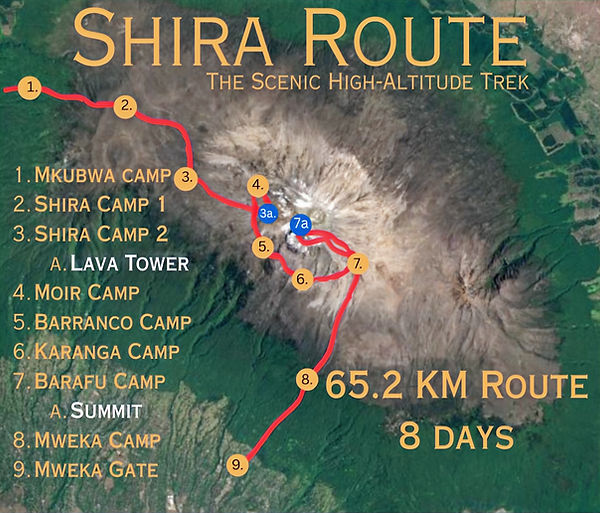
Shira Route Map
A Journey Through the Heart of Kilimanjaro's Wild Side
Shira begins where other routes spend two days arriving: high on Kilimanjaro's western Shira Plateau, at around 3,600m. From the plateau's open wilderness the route crosses to join the southern circuit at Barranco, then follows the classic line through Karanga and Barafu to the summit, descending by the Mweka trail.
Want to fly through it day by day? Explore our interactive Shira route map, where you can tap every camp and see the elevation profile for each stage.
The Shira Route is one of Kilimanjaro's most distinctive trails, beginning at altitude on the vast, open Shira Plateau, it immediately immerses you in high-altitude wilderness unlike anything on the mountain's busier southern routes. Spectacular volcanic scenery, excellent acclimatisation, and relative solitude make this an outstanding choice for nature lovers, photographers, and experienced trekkers.
This guide covers the route map, the day-by-day itinerary, distances, difficulty, success rates, costs, and how Shira compares with Lemosho.
Start Location: Shira Gate (3,600m / 11,800ft)
Your trek begins higher than any other route on Kilimanjaro, already above the tree line on the open Shira Plateau. The landscape is immediate and extraordinary: vast volcanic plains, giant groundsels, and unobstructed views of the mountain's western face. Altitude awareness begins from day one.
Day 1: Shira Gate to Shira Camp 1
-
Distance: ~8 km / 5 miles
-
Duration: 4-5 hours
-
Environment: Open high-altitude moorland, volcanic formations, and sweeping plateau views. You are already above 3,500m — move slowly, drink plenty, and let the mountain set the pace.
Day 2: Shira 1 to Shira 2 Camp
-
Distance: ~7 km / 4.3 miles
-
Duration: 4-5 hours
-
Environment: Alpine moorlands, volcanic rock formations, and expansive views of the mountain's north and west faces. The plateau opens up dramatically as you approach Shira 2.
Day 3: Shira 2 to Lava Tower and Barranco Camp
-
Distance: ~12 km / 7.5 miles
-
Duration: 6-7 hours
-
Environment: Ascend to Lava Tower (4,630m / 15,190ft) for critical acclimatisation. Climb high, sleep low. Then descend into the dramatic Barranco Valley, one of Kilimanjaro's most spectacular campsites. This is a pivotal day on the mountain. The Lava Tower stop is essential for acclimatisation and the descent into Barranco rewards you with some of the finest scenery on the entire route.
Day 4: Barranco Camp to Karanga Valley
-
Distance: ~8 km / 5 miles
-
Duration: 4-5 hours
-
Environment: The day begins with the iconic Barranco Wall — a steep, exhilarating scramble that every climber remembers. Above it, alpine meadows and glacier views open up across the southern face of the mountain.
Day 5: Karanga Valley to Barafu Camp
-
Distance: ~4 km / 2.5 miles
-
Duration: 3-4 hours
-
Environment: Rocky, barren, and stark high-altitude landscape. Barafu Camp (4,673m) is your staging ground for the summit. Rest, eat well, and prepare your gear — tonight is summit night.
Summit Night: Barafu to Uhuru Peak & Return
-
Distance: ~4 km / 2.5 miles to the summit
-
Duration: 6-8 hours round trip, starting late at night
-
Environment: Icy, windblown, and utterly awe-inspiring. The point where Africa touches the sky. Uhuru Peak (5,895m) at dawn — glaciers catching the first light, the world spread below you in every direction.
Descent: Barafu to Mweka Camp
-
Distance: ~10 km / 6 miles
-
Duration: 4-6 hours
-
Environment: Rapid descent through alpine desert back into lush moorland. The relief and elation of the descent after summit night is unlike anything else.
Final Day: Mweka Camp to Mweka Gate
-
Distance: ~10 km / 6 miles
-
Duration: 3-4 hours
-
Environment: Dense rainforest, birdsong, and the celebration of everything you have just achieved.
Summary of the Shira Trek
-
Duration: 7-8 days — recommended for better acclimatisation
-
Total Distance: Approximately 65-75 km / 40-47 miles
-
Difficulty Grade: 3/5 — moderate challenge with excellent scenery and acclimatisation
-
Success Rate: 75-85% with proper preparation
-
Required Fitness: Moderate to good — previous trekking experience and endurance help
Why Climb the Shira Route?
-
Unique Start Point: Beginning at 3,600m sets this route apart — you are in high-altitude wilderness from the very first step
-
Spectacular Scenery: Volcanic formations, open plateau, glaciers, and the Barranco Wall — some of the most dramatic landscapes on the mountain
-
Less Crowded: Genuine solitude away from the busier southern routes
-
Excellent Acclimatisation: The plateau start and gradual ascent profile give your body real time to adapt
Is the Shira Route Right for You?
If you want high-altitude wilderness from day one, extraordinary volcanic scenery, and a route that feels genuinely off the beaten path — the Shira Route delivers all of it. Its balance of challenge, acclimatisation, and reward makes it perfect for experienced trekkers seeking an authentic, immersive Kilimanjaro experience.
Prepare for stunning landscapes, high summit success rates, and nights under an
African sky that you will never forget.
Who the Shira Route Is For
-
Choose Shira if: you are already acclimatised, for example coming off Mount Meru or arriving from time at altitude, and you want the plateau's high wilderness from your very first step.
-
Think twice if: this is your first time at altitude. Starting at 3,600m skips the gradual ascent your body uses to adapt, and for most first-timers the neighbouring Lemosho route is the wiser way onto the same plateau.
"If you have experience at altitude or live at altitude,
then Shira is a great route.
If you haven't or don't then opt for Lemosho and enjoy the hike".
Graham - Founder
How Long Is the Shira Route?
Gate to gate, Shira is roughly 65 to 75 km (40 to 47 miles) over 7 to 8 days, with daily stages between 4 and 12 km. From the high start it crosses the full breadth of the Shira Plateau before joining the southern circuit at Barranco for the traverse to Barafu and the summit.
How Hard Is the Shira Route?
We grade Shira 3 out of 5, with a caveat the grade cannot capture: the vehicle does the first 1,500m of climbing for you, and your body notices. Waking on day one at 3,600m is a genuine physiological test that the gradual routes never set, which is why we assess every Shira climber's altitude history before recommending it. Beyond the start, the route shares the southern circuit's character: the Barranco Wall scramble, the traverse to Barafu, and the midnight summit push.
Shira Route Success Rate
On 7 to 8 day itineraries, Shira's success rates are strong, around 75 to 85 percent by industry estimates, because the route's length still delivers good acclimatisation once the high start is absorbed. Our own Shira success rate is 89 percent. The route rewards climbers who arrive ready for its first night. Read our full breakdown of Kilimanjaro success rates by route.
Best Time to Climb the Shira Route
Shira climbs best in the dry seasons, January to early March and June to October, when the plateau's famous open views earn their reputation. The high, exposed start makes it the route most worth timing well: the plateau in clear weather is one of the great sights in African trekking, and in cloud it keeps its secrets. See our honest month-by-month guide to the best time to climb Kilimanjaro.
What Does the Shira Route Cost?
Our Shira expeditions start from $4,050 per person, including transfers to the high trailhead, hotel nights in Arusha, all park fees, certified guides, fair-paid porters, all meals on the mountain, supplemental oxygen carried on every expedition, and professional camping equipment. A 20 percent deposit secures your place. See our full dates and prices, or read our prices explained page.
Shira or Lemosho?
The honest answer: they are siblings, and Lemosho is the one we recommend more often. Both cross the Shira Plateau and join the southern circuit; the difference is entirely in how you reach the plateau. Lemosho walks up to it through forest over two days, building acclimatisation as it goes; Shira drives to it, trading those adaptation days for immediate wilderness. If you are already acclimatised, Shira's high start is a gift. If you are not, take Lemosho and arrive on the plateau with your body already on side. Read the full Lemosho route guide and map to compare.
Frequently Asked Questions
How long is the Shira route?
About 65 to 75 km (40 to 47 miles) over 7 to 8 days, starting high on the Shira Plateau and joining the southern circuit at Barranco for the summit push from Barafu.
Where does the Shira route start?
At around 3,600m on the western Shira Plateau, the highest starting point of any Kilimanjaro route, reached by vehicle rather than climbed on foot.
How hard is the Shira route?
Grade 3 out of 5, but its high start is a real physiological test: beginning at 3,600m skips the gradual acclimatisation of other routes, so it suits climbers with recent altitude experience.
What is the success rate on the Shira route?
Around 75 to 85 percent on 7 to 8 day itineraries for suitably prepared climbers. Our own rate is 89 percent.
Shira or Lemosho: which should I choose?
Lemosho for most climbers: it reaches the same plateau on foot, building acclimatisation on the way. Shira suits those already acclimatised who want the high wilderness from day one.
Is the Shira Plateau worth it?
In clear weather it is one of the great sights of African trekking: a vast high caldera of moorland and volcanic ridgelines with Kibo rising beyond. Both Shira and Lemosho cross it in full.